DESMOND launches major update to its type 2 diabetes education curriculum
By Alison Northern, Implementation Lead
January 2026 marked a major milestone for the DESMOND (Diabetes Education and Self‑Management for Ongoing and Newly Diagnosed) Programme with the launch of Version 7 of its nationally recognised type 2 diabetes curriculum. This is the most substantial revision in the programme’s 20‑year history, reflecting significant advances in diabetes science, clinical guidance, behaviour‑change research and inclusive health communication.
Led by the Leicester Diabetes Centre (LDC), the update follows more than 20 months of collaboration, testing, piloting, and feedback from Educators, participants, and international partners.
Why the curriculum needed updating
The last five years have seen rapid developments in understanding type 2 diabetes, including new evidence on gut hormones, fat storage, remission, sleep, physical activity, and the psychosocial aspects living with type 2 diabetes. Major treatment innovations—such as GLP‑1 therapies—also prompted a refresh.
In parallel, shifts toward virtual education, a stronger focus on health literacy, and the need for more inclusive language highlighted the importance of updating DESMOND’s content. The aim was to make the curriculum clearer, more engaging, and better aligned with the realities of people living with type 2 diabetes today.
How the review was conducted
Beginning in mid‑2024, the review drew expertise from physical activity specialists, dietitians, nutrition scientists, behavioural scientists, psychologists, clinical academics, DESMOND Educators and trainers, and international colleagues, including partners in Australia.
Maintaining the strong theory-base, the team retained the established DESMOND structure—six hours of delivery by two trained Educators—while modernising the learning experience. Throughout 2025, the updated materials were repeatedly piloted and refined. Observations, participant feedback and timing checks ensured that all changes enhanced understanding and maintained DESMOND’s facilitative, group‑based learning style.
Key changes in DESMOND version 7
1. Modernised materials
Participants now receive:
An interactive workbook replacing the previous handbook
A refreshed two‑page MyHealthMap for tracking health information
An introduction to MyDESMOND (DESMONDs digital programme), reflecting its growing role as vital ongoing support
2. Expanded understanding of type 2 diabetes
Version 7 provides clearer explanations and activities around four key physiological areas:
Insulin resistance
Insulin insufficiency
Gut hormones
Body fat storage
New and updated content helps participants better understand what is happening within their bodies.
3. Updated treatment and management
A simplified section explains how to manage blood glucose, supported by new visuals. Emotional wellbeing now features more prominently, giving space for participants to explore support strategies. A single visual brings together the six main self‑management strategies, highlighted throughout the workbook to reinforce learning.
Medicines are described in a clear, non‑clinical style, supported by a take‑home worksheet to guide conversations with healthcare teams.
4. Monitoring, remission and self‑management
Key updates include:
Removal of urine testing
Introduction of continuous glucose monitoring (CGM)
Optional Time in Range (TIR) tracking
Accessible explanation of remission criteria
5. Major updates to dietary education
The dietary section is even more practical, inclusive and culturally relevant. Changes include:
Earlier discussion of weight management
Realistic portion‑size activities
A new carbohydrate activity replacing the sugar‑cube game, incorporating fibre and protein
Refreshed content on fats and food labels
6. Cardiovascular health and long‑term implications
Participants explore long‑term risks such as cardiovascular disease, interpret their own blood pressure and cholesterol values, and review updated information on protective medications. Foot health, retinal screening, kidney function and nerve health have also been refreshed.
7. New focus on diabetes distress and diabetes-related stigma
A dedicated section introduces diabetes distress using the PAID‑5 tool, validating emotional experiences and linking them to routine care processes, and stigma awareness has been weaved throughout the programme in line with recent international recommendations about embedding stigma discussions in diabetes education.
8. Physical activity and the “5Ss”
Physical activity education now uses real‑life imagery and covers the 5Ss:
sitting, steps, strength, sweating and sleep, encouraging participants to relate the content to their daily routines.
9. Enhanced behaviour change support
Behaviour change-content has been strengthened throughout, including:
A new case study, improved worksheet and structured partner work for the goal setting and action planning section
Ensuring the update was mapped using the Behaviour Change Techniques (BCTs) Taxonomy (BCTTv1) whilst retaining DESMOND’s underpinning theory-base
Reiterating key BCTs within the new interactive workbook
Reflections and next steps
Leaders across the DESMOND team emphasised the scale of the revision, the importance of retaining the programme’s person‑centred philosophy, and the value of bringing the latest research—such as the 24‑hour behaviour model—into everyday practice. The next phase focuses on supporting more than 800 Educators across over 100 organisations to adopt the new curriculum confidently.
Looking ahead
DESMOND Version 7 represents a major evolution—more inclusive, practical and aligned with modern evidence. By combining up‑to‑date research with real‑world insights and a strong focus on emotional and physical wellbeing, the programme aims to equip people with type 2 diabetes with the tools and confidence to make meaningful, lasting changes to their health.
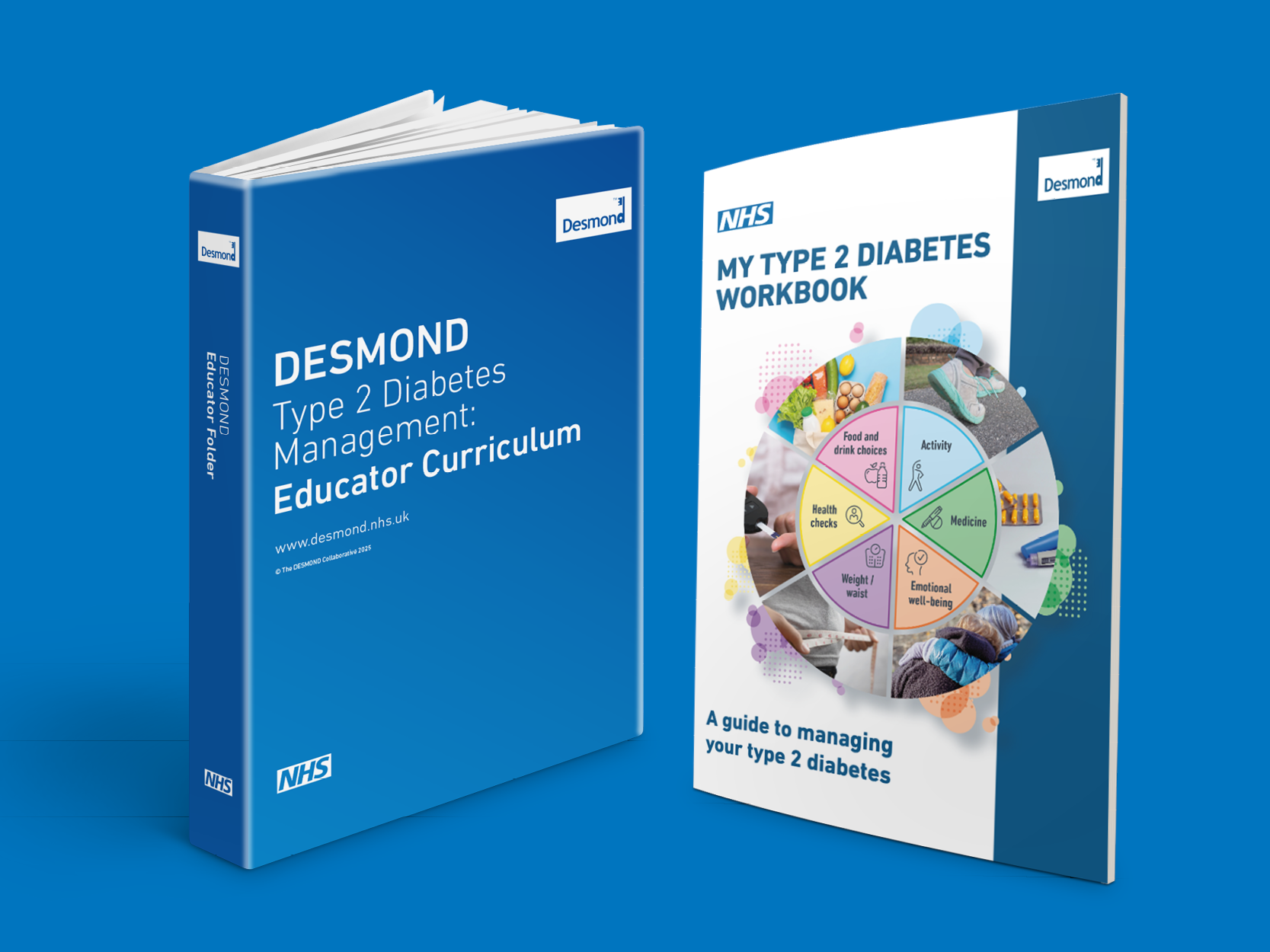
Front cover of the new curriculum and workbook.
Latest LDC News: